
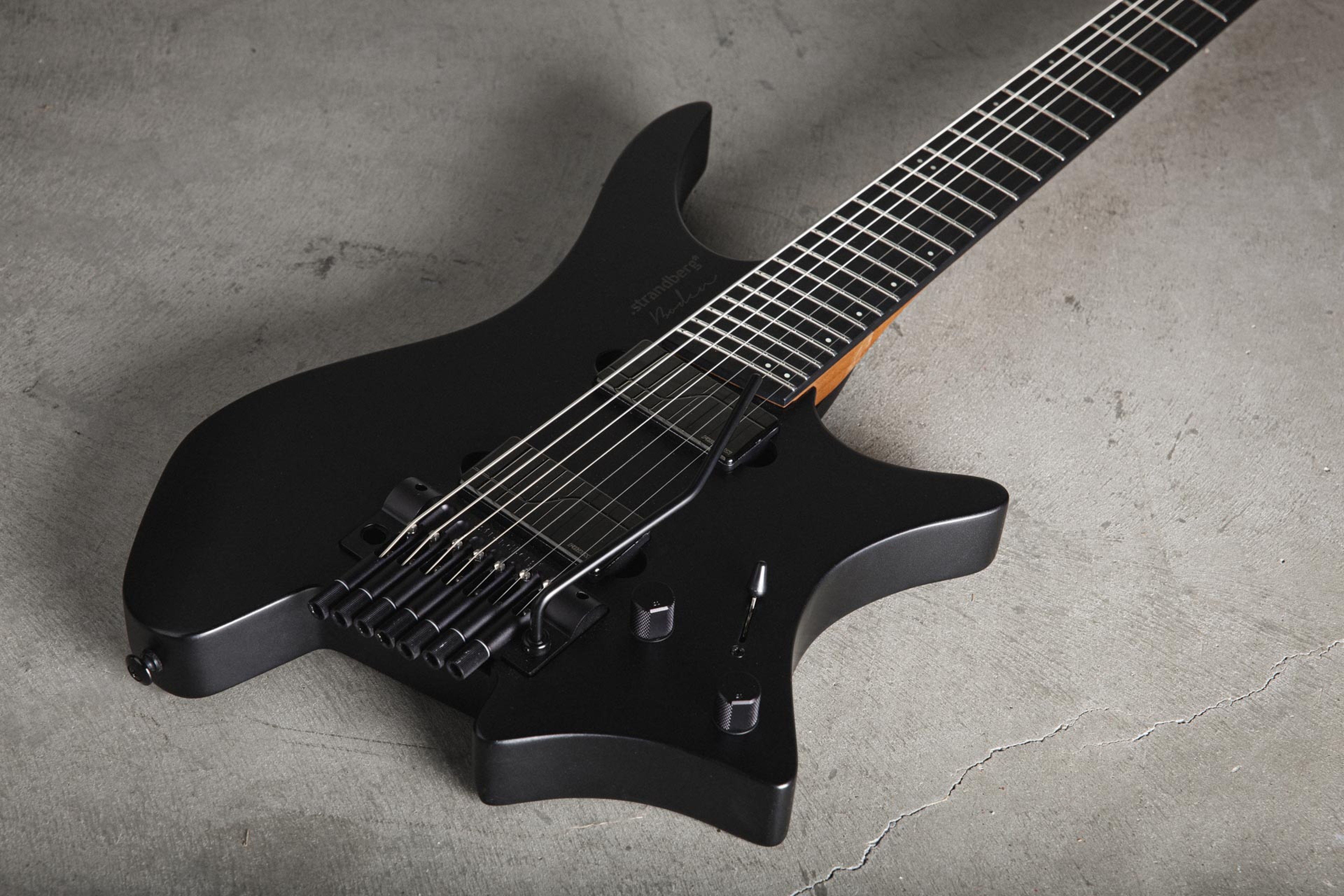


This is the most common tuning for seven-string guitars, essentially extending the standard six-string guitar tuning by adding a lower B-string. This tuning gives access to 5 additional notes below the E2 of a 6-string guitar tuned to E-standard without altering the pitch or fretboard layout of the first 6 strings.
This makes it popular in heavier styles of music, but also among musicians in various genres who need to cover a wide range of notes without changing tuning or instrument.
This tuning is the ideal introduction to 7-string guitars as it preserves most of the basic guitar note layout while adding an additional string. It also preserves familiar chord shapes, and scale patterns to ease the transition.
In this tuning, the low B-string is tuned down a whole step to an A, providing the equivalent to the Drop-D tuning on a 6-string guitar, which has been popular for decades. This tuning facilitates easier fingering for power chords on the lowest strings as well as an even greater tonal range overall which has grown in popularity in recent years.
It’s also the preferred tuning by .strandberg* artist Connor Kaminski, who said that:
“You still get your regular six-string guitar, but get access to really easy power chords, and the drop chord shapes. You get this access in a really helpful way.”
There are several different tunings that are popular among 8-string guitar players, but the most common ones are:
Standard tuning
Drop-E tuning
This is the most common tuning for 8-string guitars, extending the standard 6-string guitar tuning by an added low B (same as with 7-string guitar) and a low F# to create a tonal range from F#1 to E6 depending on the number of frets.
It maintains the same relative note intervals as a standard 6-string, which makes it familiar for players transitioning to an 8-string guitar.

This is the most common tuning for seven-string guitars, essentially extending the standard six-string guitar tuning by adding a lower B-string. This tuning gives access to 5 additional notes below the E2 of a 6-string guitar tuned to E-standard without altering the pitch or fretboard layout of the first 6 strings.
This makes it popular in heavier styles of music, but also among musicians in various genres who need to cover a wide range of notes without changing tuning or instrument.
This tuning is the ideal introduction to 7-string guitars as it preserves most of the basic guitar note layout while adding an additional string. It also preserves familiar chord shapes, and scale patterns to ease the transition.
In this tuning, the low B-string is tuned down a whole step to an A, providing the equivalent to the Drop-D tuning on a 6-string guitar, which has been popular for decades. This tuning facilitates easier fingering for power chords on the lowest strings as well as an even greater tonal range overall which has grown in popularity in recent years.
It’s also the preferred tuning by .strandberg* artist Connor Kaminski, who said that:
“You still get your regular six-string guitar, but get access to really easy power chords, and the drop chord shapes. You get this access in a really helpful way.”

Even though extended-range guitars are used in many genres, the most common ones are jazz, different variations of metal, and classical guitar.
Most of the time for metal and rock, focus is put on the heaviness of sound. Therefore, many guitar players choose the Standard or Drop-A tuning for 7-string guitars and Standard or Drop-E tuning for 8-string guitars.
Jazz players who play extended-range guitars tend to stick to the standard tuning for both 7- and 8-string guitars, as do progressive rock players. However, there are no rules and the tuning used should be selected to inspire and make playing as much fun as possible.
We covered this as a theme in itself in a bigger article, but if you want the short version, stick around and just continue to read here.
There are probably as many reasons to switch to 7- or 8-string guitars as there are guitar players, and many players also tend to choose a type of guitar on account of musical influences.
Simon Girard of Beyond Creation, who chose a 7-string and then an 8-string after hearing Beneath the Massacre, or Connor Kaminski who opted for a 7-string guitar after hearing Dream Theater.
However, there are also 3 slightly more objective reasons to make the switch from a 6-string guitar to a 7- or 8-string guitar that transcends genres and sound preferences:
1. Greater tonal range
A 7- or 8-string guitar allows musicians to access a wider range of notes for creative use in composition or performance. It’s not the same as using them all the time, but in the same way as with a wide-range instrument like Piano, the creative possibilities are vast.
2. Easier access to notes in all positions
On account of the additional strings, any chosen position will give easier access to a wider range of notes with less finger stretching while playing complex chords and melody lines.
3. Exploring new musical ground
7- and 8-string guitars are essential for many progressive genres of music, facilitating intricate riffs and complex chords. These guitars are indispensable for musicians exploring new musical realms.
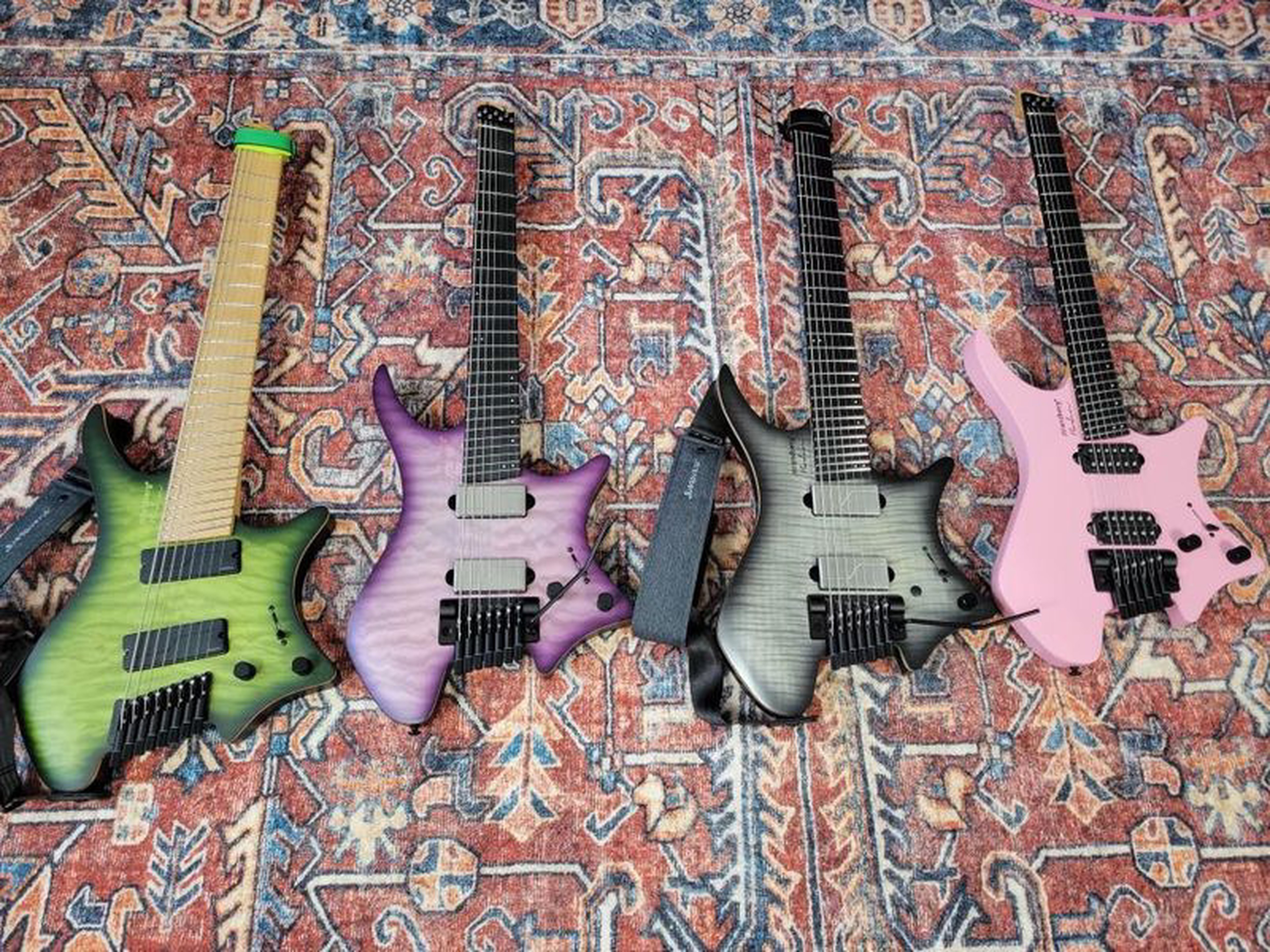


Many of our hailed artists choose to play 7 or 8 strings. During our talks with them, we’ve collected some insights about making the switch from a 6 string to more strings.
Below you’ll find thoughts and tips from Beyond Creation frontman and guitarist Simon Girard, Haken guitarist Charlie Griffiths, and social media phenomenon Connor Kaminski.


To ease your navigation through both 7 and 8 string guitars, make sure to use the different articles and guides we’ve published so far.
In “Why You Should Get a 7- or 8- String Guitar” we talk about just that: the benefits of going for more strings.
Our big guide on adjusting intonation from our support team discusses in great detail all the things to know about intonation on your .strandberg* guitar.
In “The Artistry of Extended Range” 3 different .strandberg* artists show of some great skills and playthroughs on 7 and 8 string guitars.
And, even though it might have aged a little, we another article about multiscale which dives a little deeper into stings and scales. Check it out here.
We hope you enjoyed this guide on tuning for 7 and 8 string guitars. Remember, even though there are some guidelines, nothing is set in stone. There are many different ways to tune your 7 or 8 string guitar, and the best way to find your favorite is go wo wild on the Internet, and then to try out, test and play a lot.
Good luck!
If you’re interested in our selection of multiscale guitars, explore our entire range of 7 string models and 8 string models to find your ideal match.
